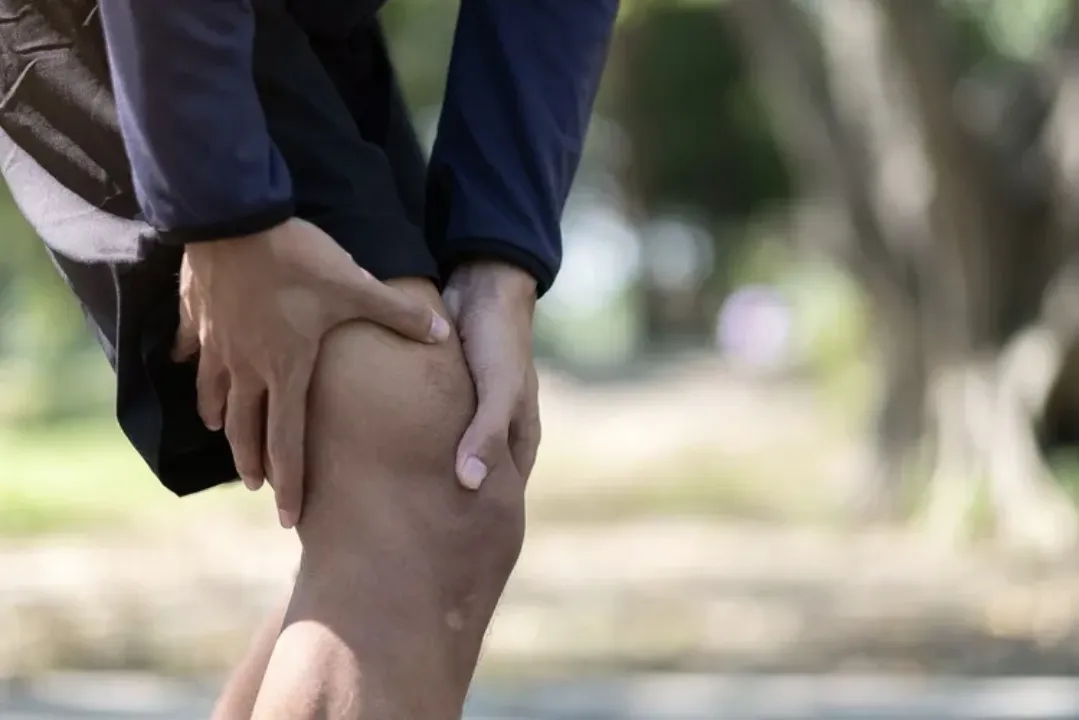
You’ve been standing at work, cooking dinner, running errands, or moving through a busy day — and by evening, your knees feel tight, achy, swollen, or just plain exhausted. Yet when you sit down, the discomfort fades. The moment you get back up, it comes roaring back. If this sounds familiar, you’re not imagining it. Knee pain after standing all day is one of the most misunderstood early warning signs of joint stress, and most people don’t realize it’s their body trying to communicate something important.
At Niva Health, we see patients all the time who assumed their knee pain was just fatigue, aging, or a long day on their feet. But when pain consistently shows up after standing, walking, or being upright — especially if it disappears at rest — it’s often an early indicator of underlying joint changes. These changes may be subtle in the beginning, but ignoring them can lead to inflammation, degeneration, and long-term mobility problems.
The good news? When caught early, the causes of knee pain from standing can be corrected with the right support. And with today’s advancements in regenerative medicine, many patients can avoid surgery entirely. Our non surgical knee pain treatment options are designed to help you regain movement, reduce inflammation, and protect your knees before small problems become major limitations.
Understanding Why Your Knees Hurt After Standing All Day
Your knees are designed to support your entire body weight with every step, bend, and movement. They’re powerful, but they’re not indestructible. When you stand for long periods, the knee joint takes on a tremendous amount of pressure. If the muscles surrounding the knee are weak, if the cartilage is beginning to thin, or if inflammation is brewing, the knee will naturally start to ache.
The pain that appears only during weight-bearing activities — but fades during rest — is one of the earliest signs that the knee joint is struggling to cope with the demands placed on it. This pattern helps distinguish mechanical joint stress from other issues. If standing brings pain, but sitting relieves it, your knee is signaling that there is an imbalance, irritation, or early degeneration occurring.
While this might start off as mild discomfort, it usually progresses if left unmanaged. That’s why it’s so important to understand the underlying factors behind knee pain that only appears during activity.
The Most Common Causes of Knee Pain from Standing
Knee pain that intensifies during standing is often tied to mechanical strain in the joint. Over time, repetitive stress weakens support structures, irritates soft tissue, and alters the way the joint moves. One common cause is inflammation of the cartilage lining the joint. As cartilage begins to thin — even slightly — the bones don’t glide as smoothly as they should, creating friction that becomes noticeable only during weight-bearing movement.
Muscle weakness is another significant contributor. When the muscles around the hips, thighs, calves, and knees are not strong enough to stabilize the joint, the knee absorbs more impact than it’s designed to. This imbalance puts additional strain on the cartilage, tendons, and ligaments. The result? Pain that shows up only when those structures are loaded with weight.
Tendon irritation also plays a role. Tendons around the knee can become overworked when the joint isn’t properly supported. This irritation may not be painful during rest, but once you stand or walk, the inflamed tendons are forced into action — triggering discomfort.
Even your posture or gait can influence knee stress. If your feet roll inward, if you shift weight to one side, or if you walk with slight hip imbalance, the knee joint absorbs uneven pressure. This uneven distribution leads to pain during standing long before pain appears at rest.
While these issues vary in severity, they all point to the same message: your knee is working harder than it should and needs help.
Why Your Pain Disappears When You Sit
Many people are confused when pain shows up only during standing or walking. They assume that because their knee feels comfortable while sitting, the problem can’t be serious. But the opposite is often true. Pain-free sitting masks the strain on the joint because there is no load placed on the knee. Without pressure, inflammation and friction subside temporarily, giving you a false sense of recovery.
However, once you stand, the joint is forced into compression, and any underlying irritation becomes immediately apparent. This back-and-forth cycle — pain during activity but relief during rest — is one of the most recognizable signatures of early knee degeneration. And while you may not feel pain all the time, the underlying stress is still present.
This is why early evaluation is essential. Addressing the issue while symptoms are intermittent is far easier than treating a joint in advanced degeneration.
The Emotional Impact of Knee Pain
Knee pain doesn’t stay confined to your knees. It affects everything from your energy levels to your daily mood. People who experience knee pain after standing all day often describe feeling limited and discouraged by the end of the day. You may begin planning your activities more cautiously, walking less, avoiding stairs, or sitting whenever possible to prevent discomfort.
Over time, pain can shape your entire routine. You may decline social activities, quit hobbies you enjoy, or feel frustrated by your body’s inability to keep up. And when you finally sit down at night, you might find yourself thinking about what tomorrow will feel like — rather than fully relaxing.
Pain, even mild pain, changes how you perceive movement, freedom, and independence. That’s why seeking support early is about more than joint health — it’s about your overall quality of life.
When to Take Activity-Related Knee Pain Seriously
Many patients tell us they waited months — or even years — before seeking help because they thought pain only during activity wasn’t a big deal. But activity-triggered pain is one of the clearest signs that the knee joint needs support. When the joint swells or becomes irritated under pressure, it indicates that there is early cartilage wear, inflammation in the soft tissue, or instability in the joint.
Pain that reappears daily or even weekly should never be ignored. If you notice discomfort when standing after long periods, if climbing stairs becomes difficult, if your knee feels stiff after inactivity, or if your movement feels less fluid than before, these are early red flags. Addressing them now can prevent the need for aggressive treatments later.
Why Non-Surgical Knee Pain Treatment Works
At Niva Health, we focus on non surgical knee pain treatment that helps patients regain mobility naturally and safely. Instead of relying on pain medications, injections that wear off, or surgical intervention, our treatments support the joint’s natural ability to heal and strengthen itself.
Our approach starts with identifying the root of the problem. We look at knee alignment, cartilage health, muscle support, and overall joint function. Once we understand what’s causing your pain, we create a personalized plan that may include regenerative therapies, targeted strengthening, and strategies to reduce inflammation and improve joint stability.
The goal is not only to reduce pain but also to improve the knee’s ability to handle daily activity without discomfort. When the joint is supported correctly, activity-related pain becomes less frequent, less intense, and eventually may disappear entirely.
How Early Treatment Prevents Advanced Degeneration
Early knee pain is a warning — not a sentence. When treated promptly, the joint has a remarkable ability to stabilize, repair irritated tissue, and regain fluid movement. Strengthening the muscles that support the knee can dramatically reduce stress on the joint. Improving alignment and reducing inflammation helps preserve cartilage. Enhancing circulation helps nourish the tissue that keeps the joint functioning smoothly.
Without treatment, however, the opposite happens. The joint becomes stiffer, cartilage thins, and pain gradually shifts from occasional discomfort to constant aching. Many people don’t seek help until they are facing surgery, and by then, options are more limited.
Choosing early intervention gives you the ability to change the trajectory of your joint health.
How Daily Life Improves with Proper Joint Support
Imagine going through a full day — standing, walking, working, running errands — and not having to mentally prepare for the evening knee ache you’ve grown used to. With proper care, your knees can regain the strength and stability they need to carry you through your day without discomfort.
Patients often report feeling more confident in their movement, more willing to engage in activities they once avoided, and more capable of completing everyday tasks. Joint health influences every aspect of life, from productivity to overall happiness.
Investing in your knees means investing in your lifestyle.
Niva Health Locations
Niva Health is committed to helping patients experience long-lasting relief with natural, non-surgical care. With locations in Jacksonville, Melbourne, Orlando, and St. Augustine, Florida, as well as Novi and Troy, Michigan, we make advanced joint care accessible and personalized.
Each of our clinics is equipped with the expertise and technology needed to evaluate knee pain, identify the underlying cause, and provide a treatment plan that restores mobility and comfort.
Conclusion: Don’t Ignore Knee Pain After Standing
If you’ve been dealing with knee pain after standing all day, your body is trying to warn you that your joint needs support. Pain that appears only during activity is one of the earliest signs of joint imbalance, inflammation, or degeneration — and catching it early is your biggest opportunity to prevent long-term damage.
Understanding the causes of knee pain from standing and choosing non surgical knee pain treatment can help preserve your mobility, reduce discomfort, and improve your quality of life.
Niva Health is here to guide you through that process with expert evaluation, personalized care, and non-invasive treatment options that support the knee’s natural healing abilities.
Don’t wait for the pain to get worse.
Take the first step today.
Click here to set up a consultation and let us help you move into a future with stronger, healthier knees.